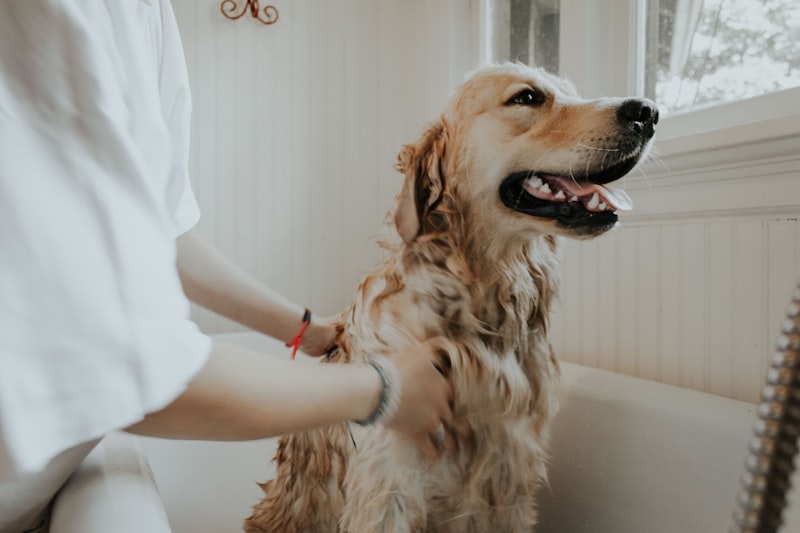
Cat Grooming & Haircuts
Full-service cat baths, lion cuts, and trim-outs for all breeds and temperaments.
- Expert cat handlers
- Lion cuts available
- All temperaments welcome
Safe, effective cat mat removal and de-shedding at Brandy's Pampered Pets in Louisville, KY. We gently work through mats without sedation and use professional de-shedding treatments that reduce loose coat by up to 80%. Serving longhaired breeds and cats prone to matting. 7675 Dixie Highway, Louisville.
Cat mats form when loose fur becomes tangled and compressed against the skin, trapping moisture and debris. Left untreated, even minor mats worsen quickly — especially behind the ears, under the armpits, and along the hindquarters. Beyond discomfort, severe matting creates real health risks that demand professional intervention.
Longhaired cats — Persians, Maine Coons, Ragdolls — are most at risk, but any cat that reduces self-grooming due to age, obesity, arthritis, or illness can develop mats on any coat type. Brandy's Pampered Pets at 7675 Dixie Highway is one of the few Louisville groomers that specializes in gentle, no-sedation mat removal for cats. We're a licensed Kentucky pet groomer with 4 years of experience handling cats that other salons turn away.
Mats pull against the skin constantly. The friction causes raw patches that attract bacteria. In Louisville's humid summers, these spots can become infected rapidly under matted fur.
Large mats in leg joints or along the belly can tighten as they grow, restricting a cat's range of motion and causing posture changes that lead to secondary joint pain.
Dense mats prevent air circulation to the skin and create warm, moist environments ideal for fleas and mites to establish themselves — hidden under fur the owner can't inspect.
Sedation masks stress rather than eliminating it and carries medical risk. At Brandy's we use a 5-step no-sedation technique developed over years of working with Louisville's most mat-prone cats. We work slowly, read feline body language continuously, and stop if a cat shows genuine distress rather than normal protest.
At drop-off we examine every mat: location, how close to the skin, whether fur has twisted or just clumped. This assessment determines whether we proceed with separation or need to discuss a clip-down option.
A professional-grade conditioning spray is worked into each mat to loosen the tangled fibres. This step alone often reduces mat diameter by 30–40% before any combing begins — making the physical separation far less uncomfortable.
Using a dematting comb and fingers — never a razor or scissors near skin — we work from the outer edge of each mat inward, gradually teasing apart the tangles. We stabilize the skin base with one hand to prevent pulling.
Once mats are separated, we do a complete comb-out of the entire coat to remove loosened undercoat and confirm no secondary tangles remain. This is where the de-shedding treatment produces the most visible results.
A finishing bath removes conditioning residue and any loose fur. At pickup we walk you through what we found, which areas are prone to recurring matting on your cat specifically, and how to maintain the coat between appointments.
Not every cat is equally mat-prone. Breed, coat structure, age, and lifestyle all determine how frequently a cat needs professional mat removal. Longhaired breeds with dense or silky coats top the risk list — but senior cats and cats with health changes can develop mats on any coat type. Here's what we see most often at our Louisville salon.
Persians have the densest, most mat-prone coat of any domestic cat. Their flat faces reduce self-grooming reach, making daily brushing non-negotiable. Professional mat removal every 4–6 weeks is standard for Persians not kept in a shorter "teddy bear" cut.
Maine Coons have three coat layers designed for cold-weather insulation. The undercoat blows out seasonally and compresses into mats under the topcoat if not maintained. Spring and fall are peak mat-removal seasons for Maine Coon owners in Louisville.
Ragdolls are paradoxically easy-to-groom looking but prone to mats in friction zones — behind ears, under forelegs, and in the collar area. Their calm temperament makes them ideal clients for our no-sedation technique.
Himalayans share the Persian's flat face and limited self-grooming reach combined with a color-pointed coat that shows matting visually. Even well-maintained Himalayans typically need professional mat removal every 6–8 weeks.
Norwegian Forest Cats have a hardy, semi-self-maintaining coat compared to Persians, but their thick undercoat can mat during seasonal sheds. Problem areas are typically the ruff and hindquarters. Most do well with professional de-shedding every 8–10 weeks.
Birmans have less undercoat than other longhairs, making them slightly less prone to matting — but their silky single coat still tangles in friction areas. Regular professional grooming every 8 weeks prevents minor tangles from becoming full mats.
Don't see your breed? Call us at (502) 291-0533 — we're happy to assess any cat's mat risk over the phone.
A professional de-shedding treatment goes far beyond what a home brushing session achieves. Specialized de-shed shampoos release loose undercoat that a brush simply can't reach, and a high-velocity blow-dry expels fur that would otherwise mat or end up on your furniture over the next several weeks.
Professional de-shedding removes the loose undercoat before it sheds naturally. Clients consistently report dramatically less fur on furniture and clothing for 4–6 weeks after treatment.
Cats ingest loose fur during self-grooming. Reducing the volume of loose coat available means significantly fewer hairball episodes — a quality-of-life improvement owners notice within days.
In Louisville's hot, humid summers, removing dead undercoat allows air circulation to reach the skin. Many longhaired cats are visibly more comfortable and active after a de-shedding treatment in June and July.
Dense undercoat traps moisture and limits natural skin oil distribution. Regular de-shedding improves coat quality over time — owners typically see shinier, healthier-looking fur after consistent professional treatment.
Last Updated: June 2026 — De-shedding available for dogs and cats. Call (502) 291-0533 to add de-shedding to any grooming appointment.
These are the questions we hear most often before a mat removal appointment at Brandy's in Louisville. If yours isn't here, call (502) 291-0533 — we're happy to talk through your specific cat's coat situation before you book anything.
Mat removal pricing at Brandy's depends on severity and number of mats. Minor mat removal is often included in a standard bath appointment. Moderate to severe matting adds $20–50+ depending on time required. Severely matted cats requiring a full clip-down are priced by consultation — call (502) 291-0533 to discuss your cat's situation.
Not always. Minor mats can often be worked through with conditioning treatment and careful combing. Mats that are tight to the skin, very close to delicate areas, or covering large portions of the body may require trimming or a partial/full clip-down for the cat's comfort. We always attempt the most conservative approach first.
Regular brushing (daily for longhaired breeds, every 2–3 days for semi-longhaired) is the best prevention. Keeping appointments every 6–8 weeks for professional grooming ensures mats are caught early. Certain areas — behind the ears, under the armpits, between the hind legs — need extra attention.
Longhaired cats benefit from professional de-shedding every 6–8 weeks. During spring and fall shedding seasons, monthly appointments help manage the higher volume of loose coat and reduce the risk of new mat formation during heavy shed cycles.
No. A de-shedding treatment adds a specific de-shed shampoo and conditioner formulated to release loose undercoat, followed by a high-velocity blow-dry and a thorough comb-out to remove as much loose fur as possible. It takes longer than a standard bath and produces significantly more fur removal.
Full-service cat baths, lion cuts, and trim-outs for all breeds and temperaments.
Stress-free nail trimming for cats — reduces scratching damage and discomfort.
Premium add-on treatments — deep conditioning, blueberry facials, and more.